
Nylon Frame Fixing
Long sleeve fixings for hollow, soft and mixed substrates
Expansion anchors need solid material to push against. A great deal of Indian construction does not offer it — hollow concrete block, AAC and aerated blocks, perforated brick and lightweight partition systems all crush or crack when a steel anchor expands inside them.
Stocked in Bengaluru · Special sizes made to order · Bulk rates available
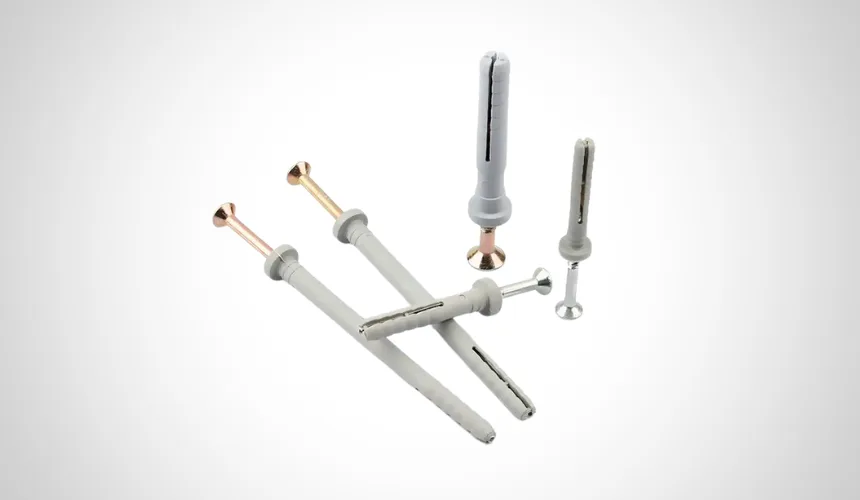
Available sizes
Dia × Length (mm)
- 6 x 60
- 6 x 80
- 8 x 60
- 8 x 80
- 8 x 100
- 10 x 60
- 10 x 80
- 10 x 100
- 10 x 120
- 10 x 140
- 10 x 160
Supplied complete with screw. Allow at least 50 mm of the sleeve inside the wall.
Available sizes for Nylon Frame Fixing: 6 x 60, 6 x 80, 8 x 60, 8 x 80, 8 x 100, 10 x 60, 10 x 80, 10 x 100, 10 x 120, 10 x 140, 10 x 160.
What it is used for
Use a nylon frame fixing for window and door frames, and for walls that are hollow or soft.
Window and door frames
Fixes straight through the frame into the wall in one go.
Hollow block walls
Works where steel anchors would just crush the block.
AAC and lightweight block
One of the few fixings that holds properly in aerated blocks.
Mixed or unknown walls
Useful in old buildings where you cannot tell what the wall is made of.
Overview
The nylon frame fixing solves this differently. A long nylon sleeve passes through the fixture and deep into the wall, and as the screw is driven the sleeve expands and folds along a substantial length, distributing load over many times the area of a point-expansion anchor.
It is the standard fixing for window and door frames for exactly this reason: a single fixing passes through the frame and into whatever the wall happens to be made of, and it works in nearly all of them. Available in 8 mm and 10 mm diameters and lengths from 60 mm to 200 mm.
Works in substrates that defeat steel anchors
Hollow block, AAC, aerated concrete and perforated brick — the materials where wedge anchors simply crush the wall.
Through-fixes in one operation
Drill through the frame and the wall together, insert, drive. No transferring hole positions, no misalignment.
No thermal or galvanic bridge
The nylon sleeve isolates the fixing from the substrate, which matters on aluminium and uPVC frames.
Long lengths for thick frames
Up to 200 mm, so deep reveals, insulated build-ups and packed frames are all reachable in a single fixing.
Specifications
Standard stock configuration. Non-standard sizes, drives and coatings are made to order — ask us.
| Diameter | 8 mm and 10 mm |
|---|---|
| Length range | 60 mm to 200 mm |
| Sleeve material | Virgin nylon 6 / PA6, UV stabilised |
| Screw material | Zinc plated carbon steel; stainless on request |
| Head styles | Countersunk (Phillips/Pozi), hex flange |
| Base material | Concrete, solid & hollow brick, AAC, aerated & hollow block |
| Min. anchorage depth | 50 mm into the base material, typical |
| Hole diameter | Equal to the sleeve diameter (8 mm or 10 mm) |
| Packing | 50 / 100 pc boxes |
Technical documentation
Exact specifications vary between manufacturers and production batches. Tell us the job and we will confirm the specification before despatch, and send the manufacturer’s datasheet or test certificate for the batch if you need it for a submittal.
Section 1 — Installation
How nylon frame fixings are installed
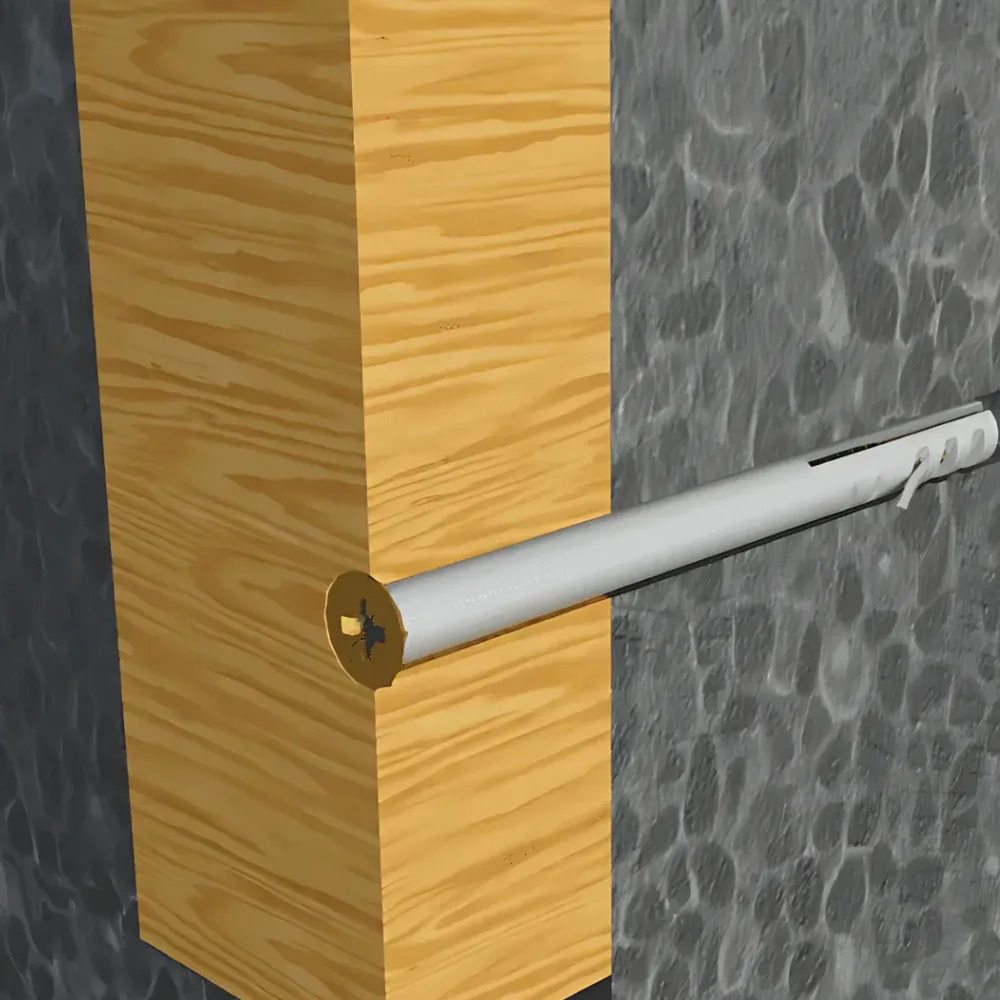
The critical measurement is the anchorage depth — how far the sleeve actually reaches into the load-bearing part of the wall, past any plaster, packing or frame thickness.
Drawing made for Modern Fastening Solution. Shown for guidance — check against your own job before ordering.
- 1
Position and pack the frame first
Get the frame plumb, level and packed at the fixing points. A frame fixing clamps the frame to the wall; it will not straighten one that is out of square, and driving it will pull the frame into any gap you left.
- 2
Drill through frame and wall together
Use an 8 mm or 10 mm bit to match the sleeve. In AAC and aerated block, drill in rotary mode only — hammer action tears an oversized hole that the sleeve cannot grip.
- 3
Allow at least 50 mm of anchorage
Measure past the frame, the packing and any plaster. Fifty millimetres into sound base material is the working minimum, more in weak substrates.
- 4
Insert the fixing and tap flush
The sleeve should pass through the frame and into the wall with the head flat against the frame. Tap gently — do not force it.
- 5
Drive the screw at low speed
Low speed, steady pressure, stop when it goes firm. Over-driving strips the nylon and the fixing is then finished. If it spins freely, the hole is oversized — move to a fresh position.
Section 2 — Applications
Where nylon frame fixings are used
Frame installation above all, and generally wherever the wall is hollow, lightweight or of uncertain composition.
Windows & doors
uPVC, aluminium and timber frames fixed into reveals of any construction.
Hollow & AAC block walls
Brackets, fixtures and supports on lightweight and aerated blockwork.
Facade & cladding sub-frames
Carrier rails and battens on mixed or unknown substrates.
Insulation systems
External insulation carriers and mesh fixed through thick build-ups.
Interior fixtures
Sanitaryware carriers, wall units, handrails and heavy shelving on partition walls.
Renovation work
Older walls of mixed and uncertain construction where a single fixing has to work regardless.
Nylon Frame Fixing — questions we get asked
What size nylon frame fixing do I need for a window frame?
Add up the frame thickness, the packing and any plaster, then add at least 50 mm of anchorage into the base material. A 60 mm timber frame with 10 mm packing and 15 mm plaster needs a minimum of 135 mm, so a 10 x 140 mm fixing is the sensible choice.
Can nylon frame fixings be used in AAC or aerated blocks?
Yes — they are one of the few mechanical fixings that work reliably in AAC. Drill in rotary mode only, never hammer, and use the longest sleeve the frame allows. Grip in these materials comes from length rather than expansion force.
How many fixings does a window frame need?
As a working rule, one fixing within 150–200 mm of each corner and then at maximum 600 mm centres along each side. Heavy or large frames and anything exposed to wind load need more — follow the frame manufacturer's schedule.
Nylon or steel frame fixings?
Nylon for hollow, lightweight and mixed substrates, and wherever galvanic or thermal isolation is wanted. Steel-sleeve frame fixings where the substrate is solid concrete or dense brick and the load is higher.
Request a price for Nylon Frame Fixing
Send us the sizes and quantities and we will come back with a price, usually the same working day. Not sure of the size? Describe the job and we will work it out.
Often ordered with this
Anchors & Rivets
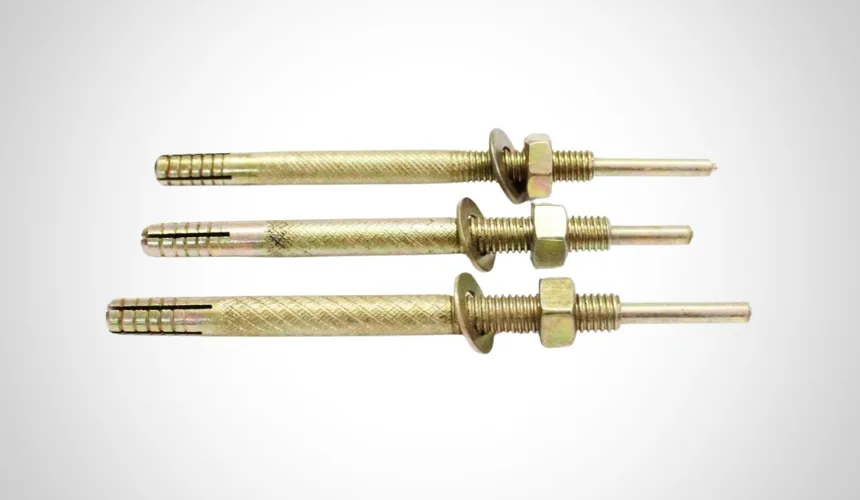
Pin Type Anchors
Hammer-set anchors for fast light and medium fixing
View specifications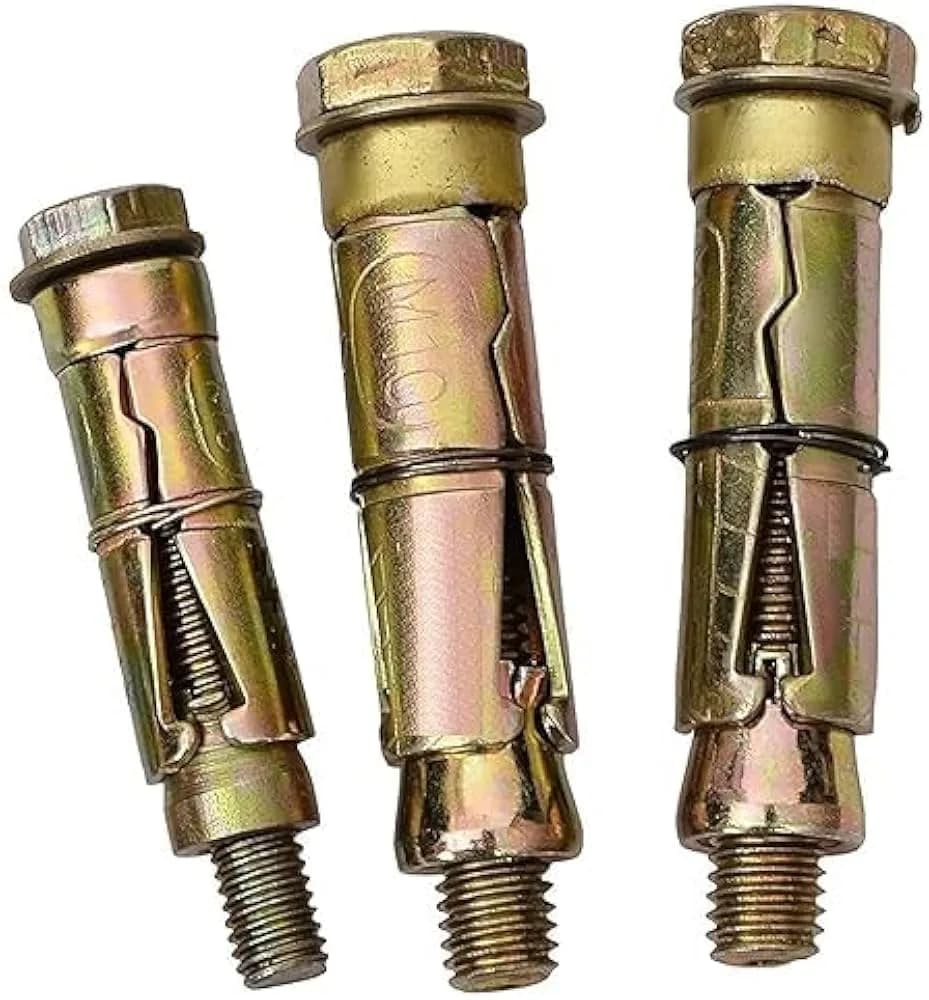
Anchors & Rivets
Rawl Bolts
Sleeve anchors for heavy shear and vibration duty
View specifications
Anchors & Rivets
Wedge Anchor Bolts
Structural through-fixing for solid concrete
View specifications
Drywall & Wood Screws
Chipboard Screws
Pulls timber and board tightly together
View specificationsTell us what you need
Send us the sizes and quantities, a photo, or just a description of the job. Most quotations go out the same working day.
Monday – Saturday, 9:30 AM – 7:00 PM · Delivery across Bengaluru, Karnataka and all India