
Rawl Bolts
Sleeve anchors for heavy shear and vibration duty
A rawl bolt — properly a sleeve anchor — differs from a wedge anchor in one important respect: the expansion sleeve runs most of the length of the anchor rather than sitting as a short clip at the tip. That spreads the expansion force over a much larger area of the hole wall.
Stocked in Bengaluru · Special sizes made to order · Bulk rates available
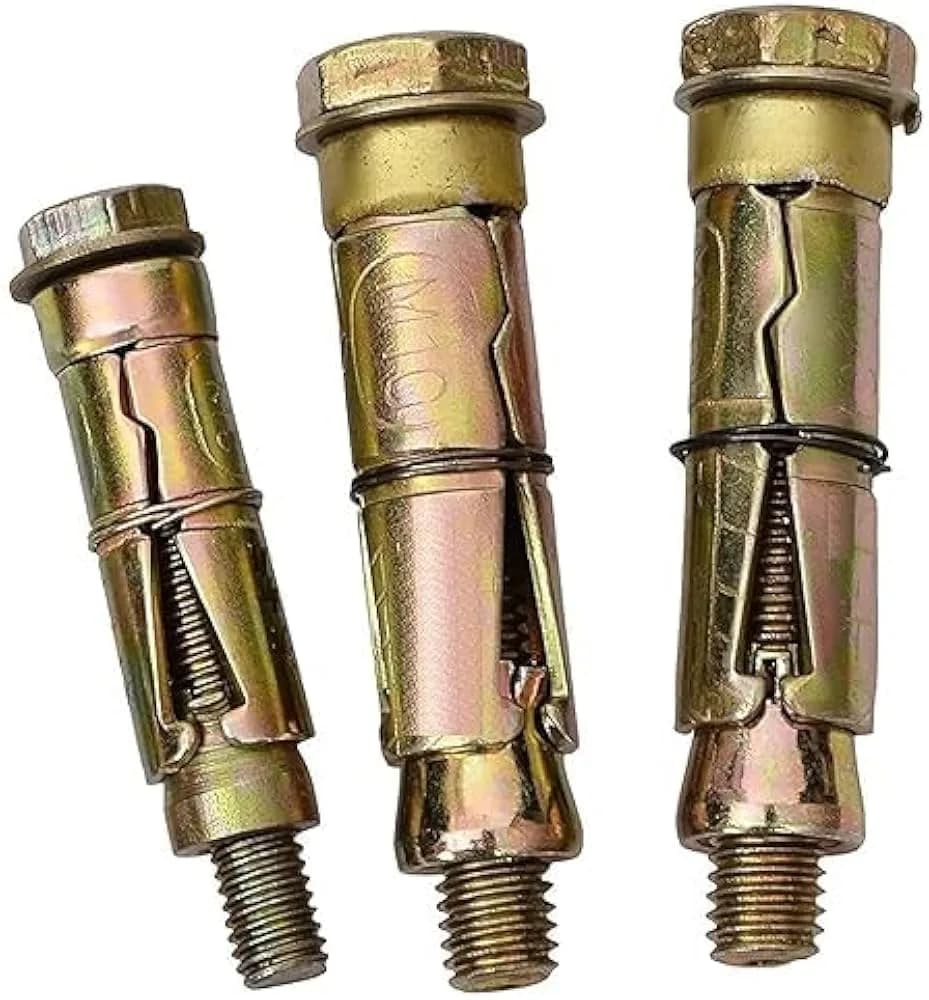
Available sizes
Thread size
- M6
- M8
- M10
- M12
- M16
- M20
M6 to M20. Lengths from 50 mm to 200 mm — tell us your fixture thickness and we will pick the length.
Available sizes for Rawl Bolts: M6, M8, M10, M12, M16, M20.
What it is used for
Use a rawl bolt for heavy fixings into concrete or solid brick, especially where there is vibration.
Vibrating machinery
The full-length sleeve grips better than a wedge anchor under vibration.
Older concrete
Spreads the pressure, so it works in concrete that would crack with a wedge anchor.
Solid brickwork
One of the few heavy anchors that works in solid brick as well as concrete.
Side loads
Fills the hole completely, so the fixture cannot shift sideways.
Overview
The practical consequences are worth understanding. Distributed expansion means lower localised stress on the concrete, which makes rawl bolts more tolerant of slightly marginal edge distances and of older or lower-grade concrete. The full-length sleeve also fills the annulus completely, which gives noticeably better performance under shear and under vibrating loads.
We stock rawl bolts from M6 to M20 in zinc plated and hot-dip galvanised finishes, in hex nut, hex bolt and loose-bolt configurations for different fixture types.
Expansion spread over the full sleeve
Lower peak stress on the concrete than a short-clip anchor, so it copes better with marginal edge distance and older substrates.
Strong in shear
The sleeve fills the hole, eliminating the slack that lets a fixture shift under lateral load.
Vibration tolerant
The distributed grip resists the gradual loosening that vibrating plant induces in point-expansion anchors.
Works in solid masonry
Suitable for solid brick and dense block as well as concrete, where many expansion anchors are concrete-only.
Specifications
Standard stock configuration. Non-standard sizes, drives and coatings are made to order — ask us.
| Diameter range | M6, M8, M10, M12, M16, M20 |
|---|---|
| Length range | 50 mm to 200 mm |
| Head options | Hex nut, hex bolt, loose bolt, eye bolt, hook |
| Material | Carbon steel; sleeve in carbon steel or stainless |
| Finishes | Zinc plated (yellow passivated), hot-dip galvanised |
| Base material | Concrete, solid brick, dense solid block |
| Min. embedment | Approx. 4–5× anchor diameter |
| Min. edge distance | Approx. 5× anchor diameter |
| Hole diameter | Equal to the sleeve outside diameter |
| Load type | Tension, shear and combined; suited to dynamic duty |
Technical documentation
Exact specifications vary between manufacturers and production batches. Tell us the job and we will confirm the specification before despatch, and send the manufacturer’s datasheet or test certificate for the batch if you need it for a submittal.
Section 1 — Installation
How rawl bolts are installed
The method is close to a wedge anchor, with one difference that catches people out: the drilled hole is sized to the outside of the sleeve, not to the bolt inside it.
Drawing made for Modern Fastening Solution. Shown for guidance — check against your own job before ordering.
- 1
Drill to the sleeve diameter
The bit size matches the sleeve outside diameter, which is larger than the bolt. Check the marking on the anchor rather than assuming — this is the most common installation error with rawl bolts.
- 2
Drill deep and clean thoroughly
Go at least 20 mm beyond the intended embedment. Blow, brush and blow again — the sleeve needs to bear against clean concrete along its whole length.
- 3
Insert through the fixture
Push the assembly through the fixture and into the hole until the washer sits against the fixture face. Tap it home gently if needed.
- 4
Tighten progressively
Take it up in stages rather than one continuous pull, which lets the sleeve expand evenly along its length. Tighten to the manufacturer's stated torque for the size you are using — we can send you the datasheet.
- 5
Re-check after loading
On vibrating plant, re-torque after the first period of running. Any anchor can bed in slightly under initial dynamic load.
Section 2 — Applications
Where rawl bolts are used
Heavy fixings into concrete and solid masonry, especially where the load has a shear or vibrating component that a point-expansion anchor would not handle as well.
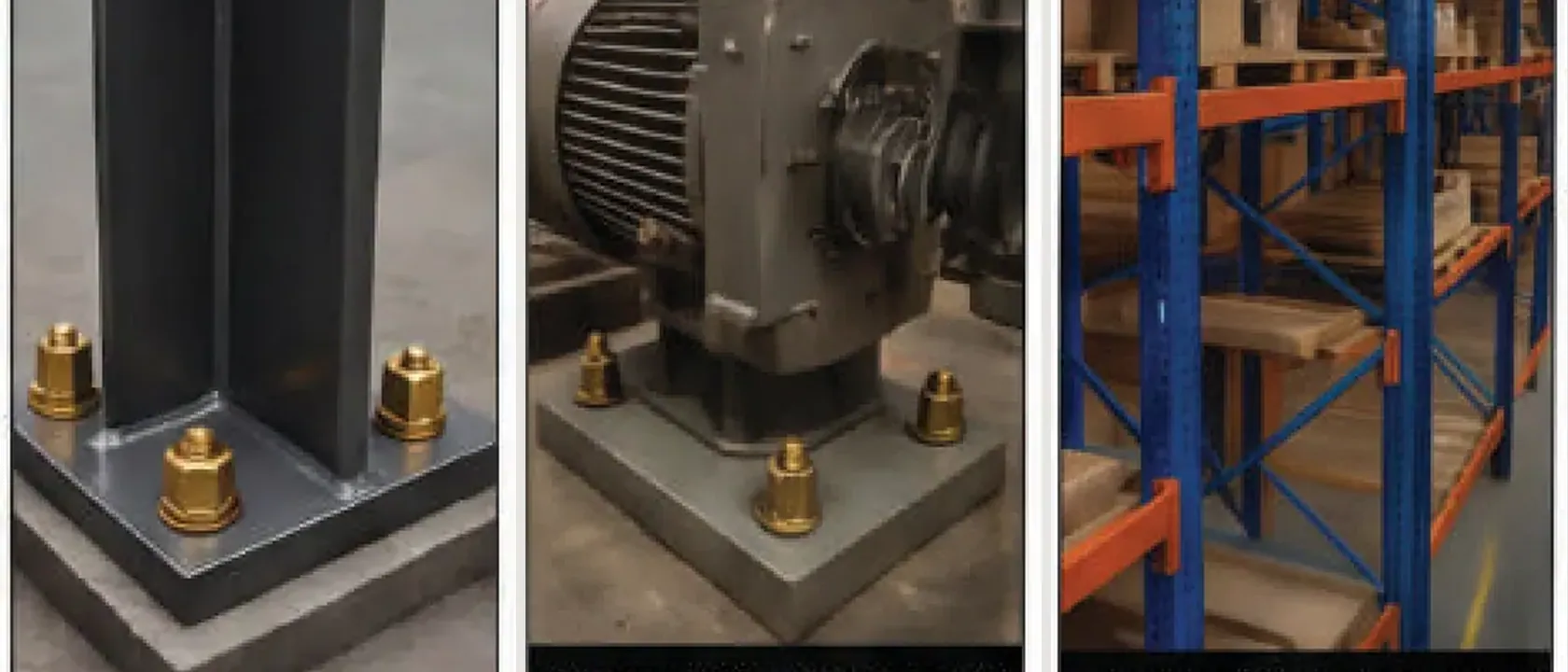
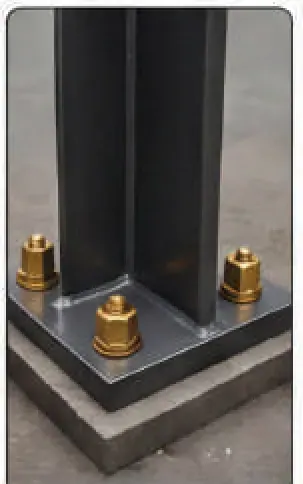
Column base fixing
Steel columns and stanchions bolted down where shear and vibration are both present.
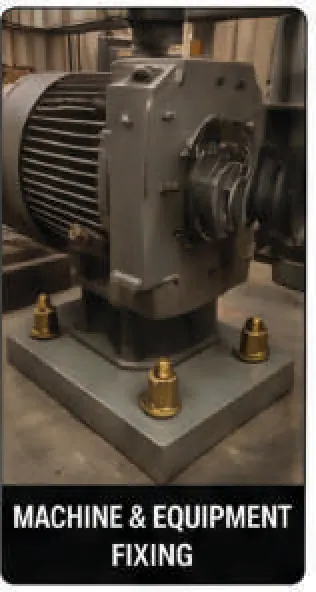
Machinery and equipment
Machine feet, motors and gearboxes bolted to concrete bases.
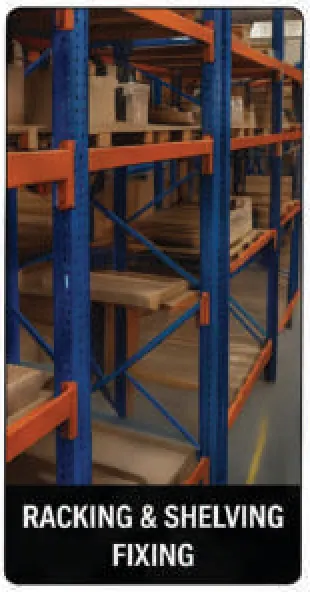
Racking and shelving
Heavy racking and shelving systems anchored into warehouse floors.
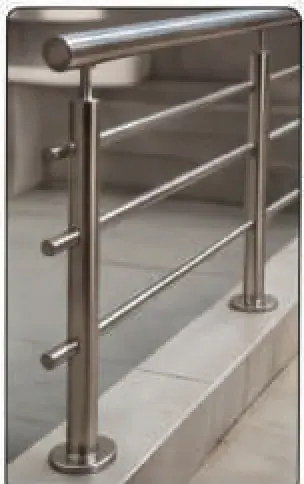
Handrails and guardrails
Stair balustrades and guardrail posts into concrete steps and slabs.

Signage and boards
Sign frames and board fixings into concrete and solid masonry.
Rawl Bolts — questions we get asked
What is the difference between a rawl bolt and a wedge anchor?
A rawl bolt has a full-length expansion sleeve; a wedge anchor has a short expansion clip at the tip. The rawl bolt distributes force over a larger area, performs better in shear and under vibration, and tolerates weaker or older concrete. The wedge anchor is cheaper and reaches higher tensile capacity in good concrete for the same diameter.
What drill bit size do I need for a rawl bolt?
The sleeve outside diameter, not the bolt diameter. An M10 rawl bolt commonly needs a 14 or 16 mm hole, depending on the version. Always read the marking on the anchor itself.
Can rawl bolts be used in brick walls?
In solid brick and dense solid block, yes — this is one of their advantages. In hollow block or perforated brick, no. Use nylon frame fixings or a chemical anchor with a sleeve there.
Are rawl bolts suitable for overhead fixing?
They can be, provided the tension capacity is verified for the specific concrete and embedment, and torque is properly controlled. For services suspended from soffits, drop-in anchors are usually the more practical and more commonly specified choice.
Request a price for Rawl Bolts
Send us the sizes and quantities and we will come back with a price, usually the same working day. Not sure of the size? Describe the job and we will work it out.
Often ordered with this
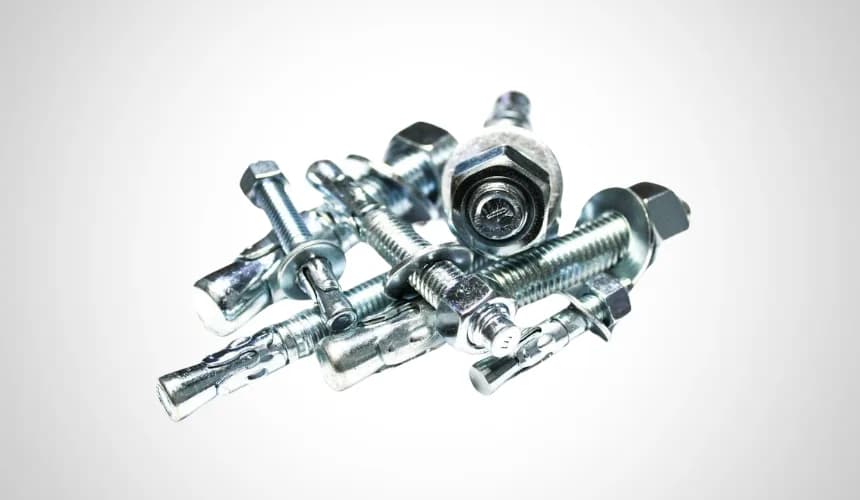
Anchors & Rivets
Wedge Anchor Bolts
Structural through-fixing for solid concrete
View specifications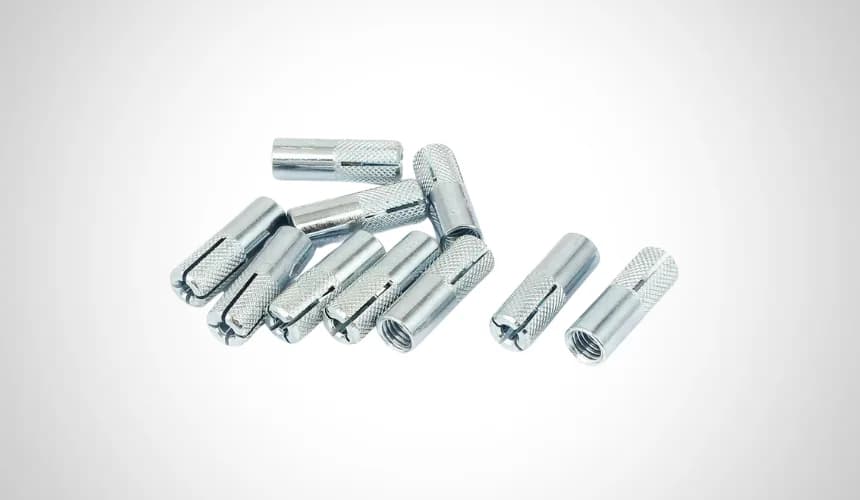
Anchors & Rivets
Drop-In Anchors
Flush internally threaded anchors for overhead services
View specifications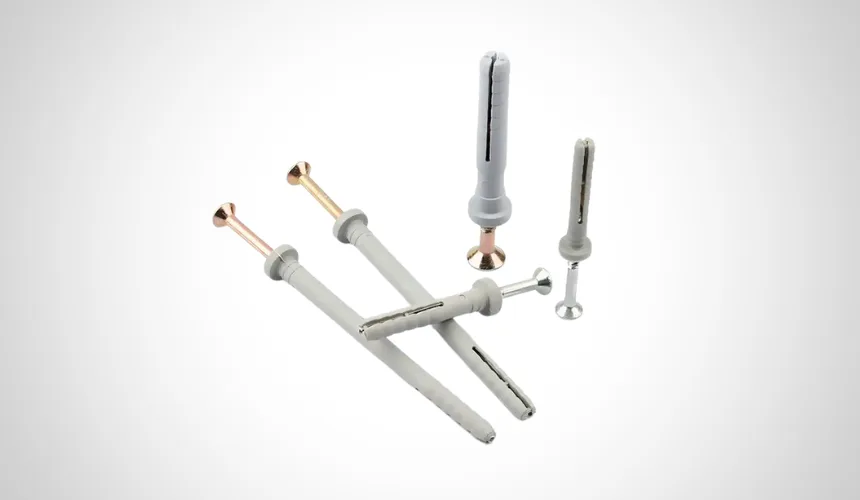
Anchors & Rivets
Nylon Frame Fixing
Long sleeve fixings for hollow, soft and mixed substrates
View specifications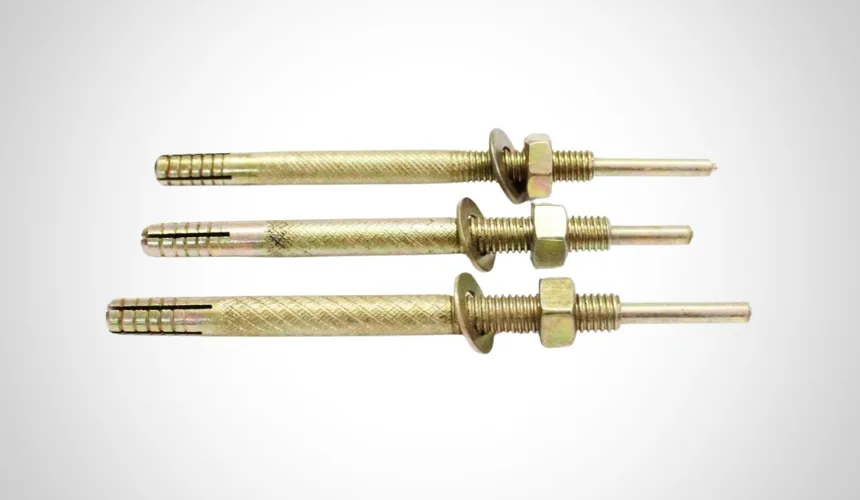
Anchors & Rivets
Pin Type Anchors
Hammer-set anchors for fast light and medium fixing
View specificationsTell us what you need
Send us the sizes and quantities, a photo, or just a description of the job. Most quotations go out the same working day.
Monday – Saturday, 9:30 AM – 7:00 PM · Delivery across Bengaluru, Karnataka and all India