
Wedge Anchor Bolts
Structural through-fixing for solid concrete
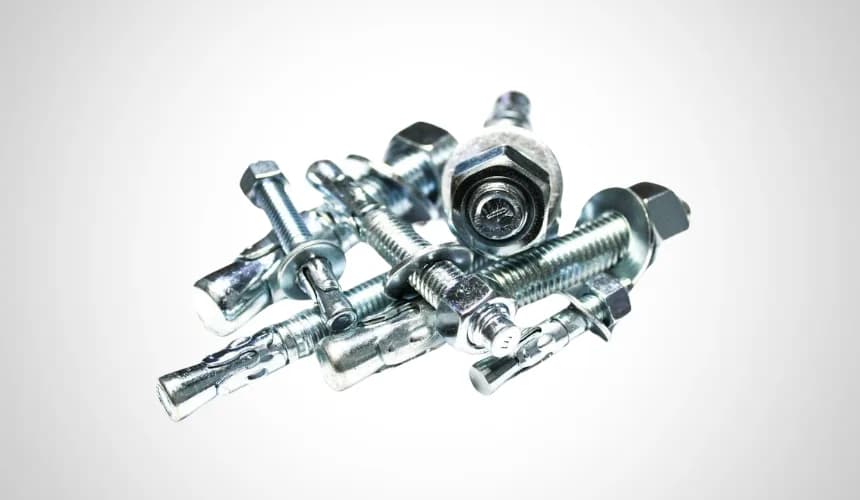
A wedge anchor is the standard mechanical fixing for transferring real structural load into solid concrete. The body carries a tapered cone at its lower end with a split expansion clip around it. Tightening the nut draws the cone up into the clip, which is forced outward against the wall of the hole. The harder it is pulled, the harder it grips.
Stocked in Bengaluru · Special sizes made to order · Bulk rates available
Available sizes
Dia × Length (mm)
- 6 x 50
- 8 x 75
- 8 x 100
- 10 x 75
- 10 x 100
- 10 x 125
- 10 x 150
- 12 x 75
- 12 x 100
- 12 x 125
- 12 x 150
- 12 x 200
- 16 x 100
- 16 x 125
- 16 x 150
- 16 x 200
- 16 x 250
- 16 x 300
- 20 x 150
- 20 x 200
- 20 x 250
- 20 x 300
Zinc plated as standard. Hot-dip galvanised and stainless made to order.
Available sizes for Wedge Anchor Bolts: 6 x 50, 8 x 75, 8 x 100, 10 x 75, 10 x 100, 10 x 125, 10 x 150, 12 x 75, 12 x 100, 12 x 125, 12 x 150, 12 x 200, 16 x 100, 16 x 125, 16 x 150, 16 x 200, 16 x 250, 16 x 300, 20 x 150, 20 x 200, 20 x 250, 20 x 300.
What it is used for
Use a wedge anchor to bolt something heavy onto a solid concrete floor, wall or ceiling.
Machine bases
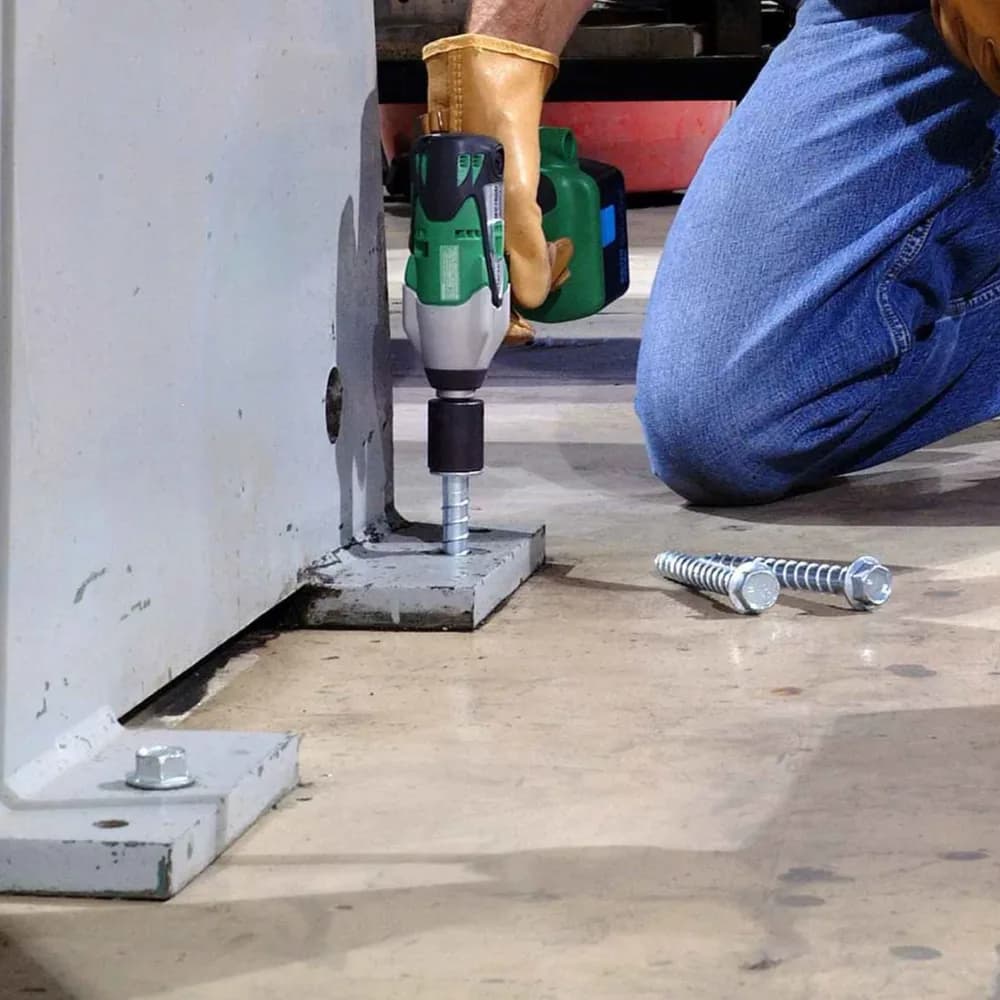
Bolting machinery and equipment down to a concrete floor.
Steel base plates
Fixing columns and structural steel to foundations.
Racking and mezzanines
Holding down pallet racking uprights and mezzanine legs.
Handrails and barriers
Anchoring guardrails, bollards and safety barriers.
Overview
Because it is a through-fixing, the fixture and the concrete are drilled in one operation using the same bit, so the hole and the fixture are automatically aligned — a practical advantage on base plates with multiple bolts.
Modern Fastening Solution supplies wedge anchor bolts from M6 to M20 in zinc plated, hot-dip galvanised and stainless grades. Tell us the load, the concrete grade and the fixture thickness and we will help you size it properly rather than by eye.
Load-following grip
The wedge action tightens under tensile load, so the anchor becomes more secure as it is pulled rather than less.
Drill fixture and concrete together
One hole, one bit, guaranteed alignment. On a multi-bolt base plate this saves a great deal of setting-out time.
M6 to M20
From light bracketry to machine bases and structural steel columns, in lengths matched to real embedment requirements.
Finishes for the environment
Zinc plated for dry interiors, hot-dip galvanised for exterior work, A2 and A4 stainless for corrosive and coastal duty.
Specifications
Standard stock configuration. Non-standard sizes, drives and coatings are made to order — ask us.
| Diameter range | M6, M8, M10, M12, M16, M20 |
|---|---|
| Length range | 50 mm to 300 mm |
| Material | Mild steel |
| Base material | Solid concrete, minimum grade M20; not for hollow block |
| Min. embedment | Approx. 4.5–5× anchor diameter |
| Min. edge distance | Approx. 6× anchor diameter |
| Min. spacing | Approx. 10× anchor diameter |
| Hole diameter | Equal to the anchor diameter (M12 anchor → 12 mm bit) |
| Supplied with | Hex nut and washer assembled |
Technical documentation
Exact specifications vary between manufacturers and production batches. Tell us the job and we will confirm the specification before despatch, and send the manufacturer’s datasheet or test certificate for the batch if you need it for a submittal.
Section 1 — Installation
How wedge anchors are installed
Wedge anchors fail for three reasons and three only: an unclean hole, insufficient embedment, and being set too close to an edge. The installation sequence exists to eliminate all three.
Drawing made for Modern Fastening Solution. Shown for guidance — check against your own job before ordering.
- 1
Drill through the fixture into the concrete
Use a hammer drill with a carbide bit of the same nominal diameter as the anchor. Drill at least 15 mm deeper than the anchor will sit, so debris has somewhere to go.
- 2
Clean the hole properly
Blow it out, brush it, blow it again. Drilling dust left in the hole is the single most common cause of anchors failing well below their rated pull-out load.
- 3
Drive the anchor through the fixture
Tap it with a hammer until the washer is against the fixture. The threaded portion should stand proud enough for the nut plus two or three threads.
- 4
Tighten to the specified torque
Use a torque wrench, not judgement, and tighten to the figure on the manufacturer's datasheet for that anchor and size. This is what sets the wedge — under-tightening leaves it unset, over-tightening can crack the concrete. Ask us and we will send the datasheet for the anchor you are buying.
- 5
Verify embedment and edge distance
Confirm at least 4.5–5 diameters of embedment and 6 diameters to any free edge before you sign the fixing off. Neither can be corrected afterwards.
Section 2 — Applications
Where wedge anchors are used
Wherever a structural or dynamic load has to be carried into a concrete slab, wall or foundation, and the fixture will not need to be removed.
Structural steel base plates
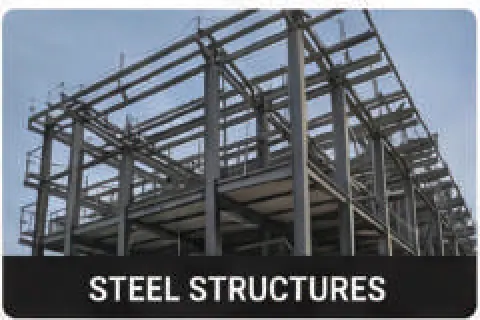
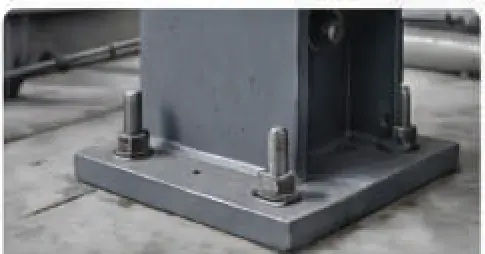
Column bases, portal frame feet and bracing connections into concrete foundations and pedestals.
Machinery and plant
Anchoring machine bases, compressors, presses and generator sets subject to vibration.
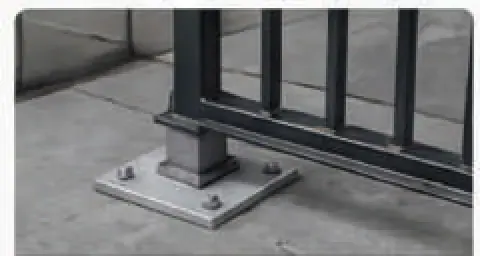
Handrails and guardrails
Balustrades, safety barriers, bollards and staircase railings fixed to slabs and walls.
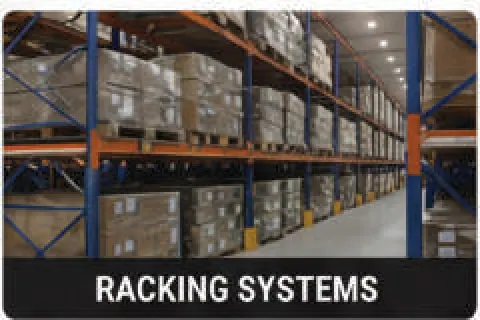
Racking and mezzanines
Pallet racking uprights, mezzanine legs and shelving systems held down to the slab.
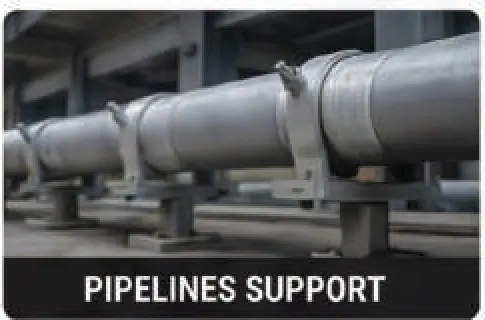
Pipe and cable supports
Pipe hangers, cable tray brackets and conduit supports off concrete walls and soffits.
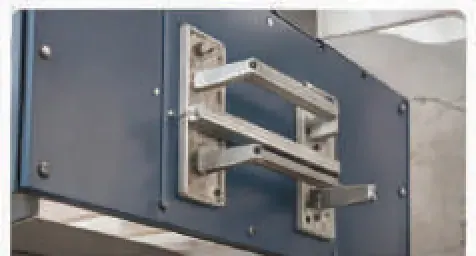
Facade and signage
Signage frames, canopy brackets and facade fixings into concrete structure.
Wedge Anchors — questions we get asked
What size hole do I drill for a wedge anchor?
Exactly the nominal diameter of the anchor. An M12 wedge anchor takes a 12 mm carbide bit. Unlike most fixings, the anchor body is designed to pass through a hole of its own size — the expansion clip does the rest.
How much weight can a wedge anchor hold?
It depends on diameter, embedment, concrete grade and edge distance, so no single number is meaningful. As an indication, an M12 anchor at full embedment in M25 concrete with adequate edge distance will commonly carry several tonnes in tension — but always apply the appropriate safety factor and confirm against the load case. We can supply the manufacturer's performance data for the size you are specifying.
Can wedge anchors be used in hollow blocks or brickwork?
No. They rely on expansion against solid material and will simply crush a hollow block wall. Use nylon frame fixings or chemical anchors in hollow and perforated substrates.
Can a wedge anchor be removed and reused?
No. The expansion clip deforms permanently on setting. If a fixture has to come off, the anchor can be cut or driven below the surface and grouted over, and a fresh anchor set in a new hole at proper spacing.
How far from the edge of the concrete can I fix?
Keep at least 6 anchor diameters from any free edge — 72 mm for an M12. Closer than that and the expansion force will crack the concrete out rather than grip it.
Request a price for Wedge Anchors
Send us the sizes and quantities and we will come back with a price, usually the same working day. Not sure of the size? Describe the job and we will work it out.
Often ordered with this
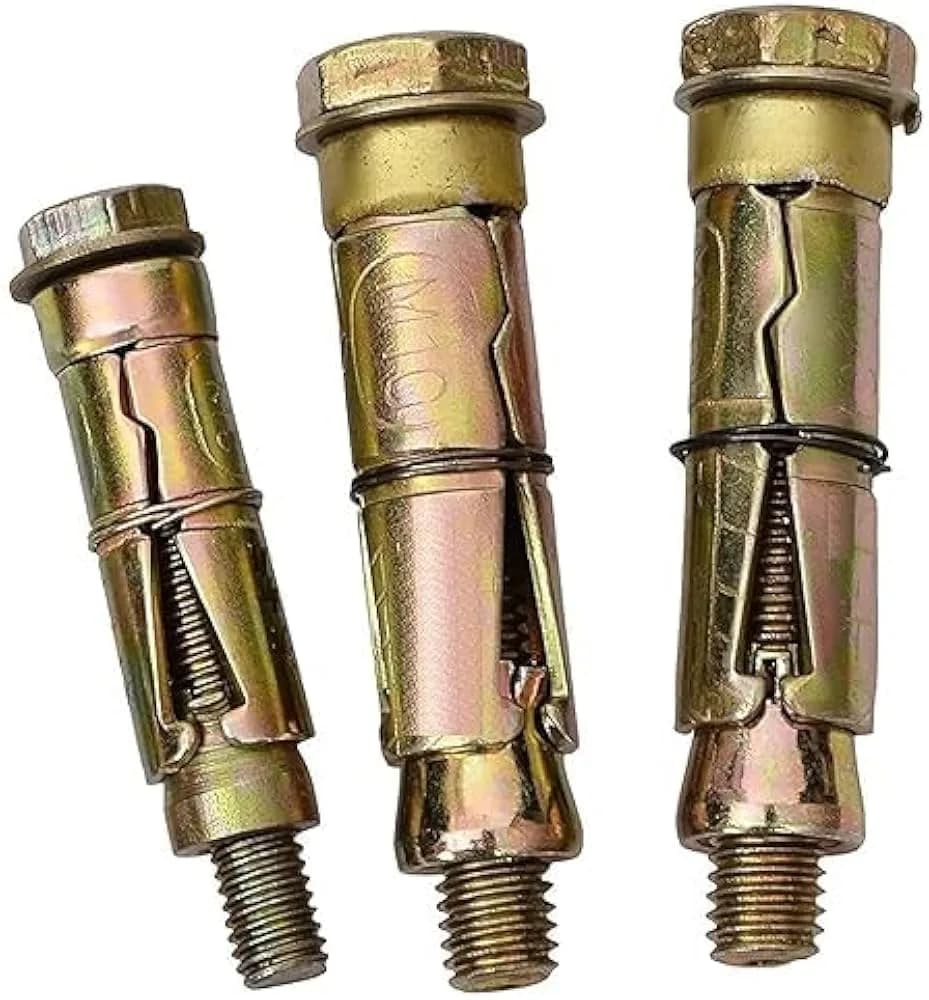
Anchors & Rivets
Rawl Bolts
Sleeve anchors for heavy shear and vibration duty
View specifications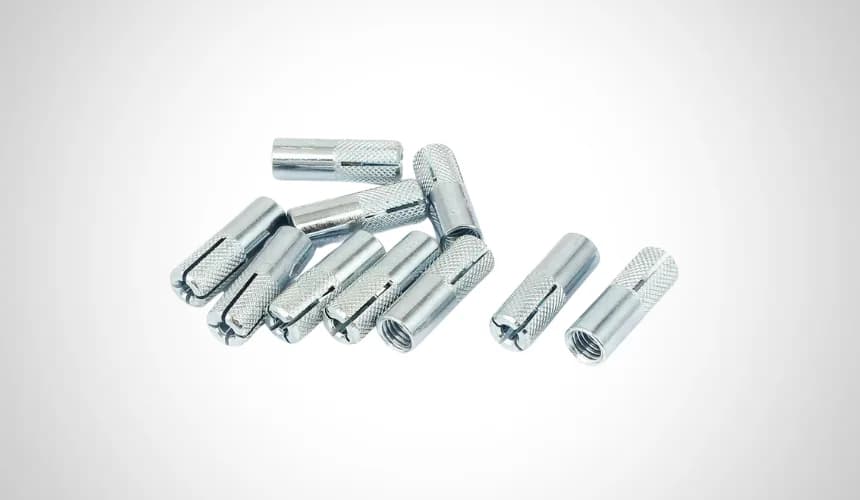
Anchors & Rivets
Drop-In Anchors
Flush internally threaded anchors for overhead services
View specifications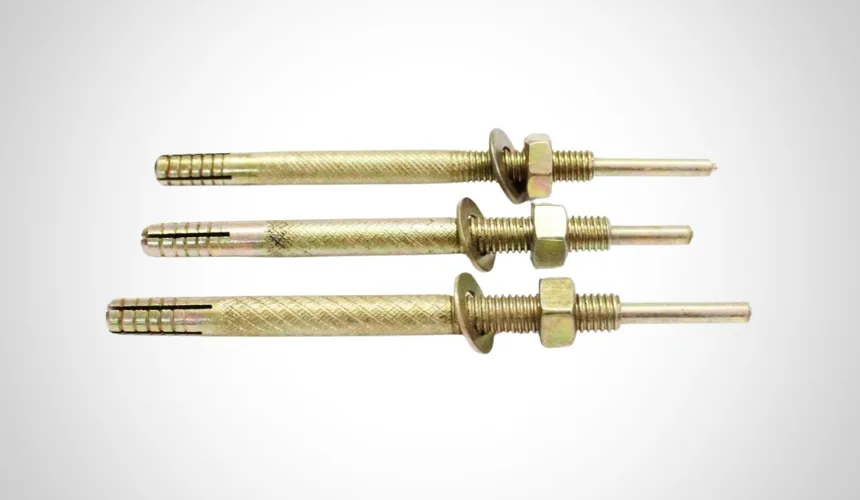
Anchors & Rivets
Pin Type Anchors
Hammer-set anchors for fast light and medium fixing
View specifications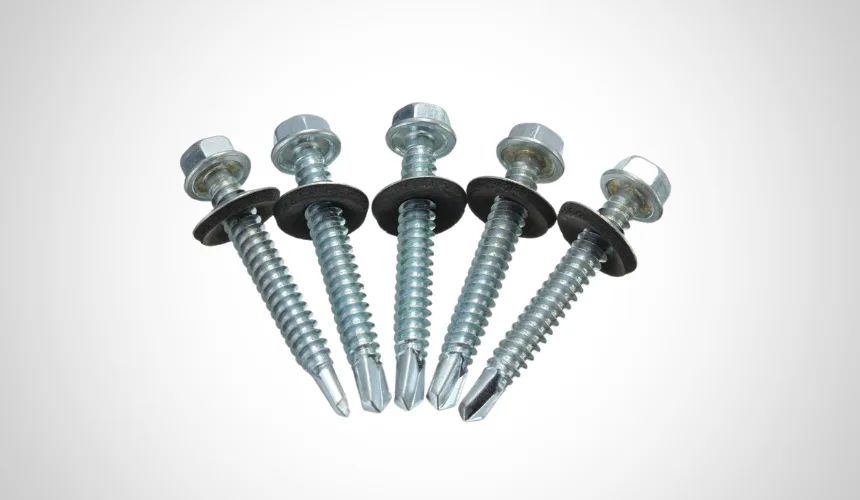
Self Drilling Screws
Self Drilling Hex Head Screws — Zinc Plated
SDS hex screws / roofing screws — the standard screw for roofing and cladding
View specificationsTell us what you need
Send us the sizes and quantities, a photo, or just a description of the job. Most quotations go out the same working day.
Monday – Saturday, 9:30 AM – 7:00 PM · Delivery across Bengaluru, Karnataka and all India